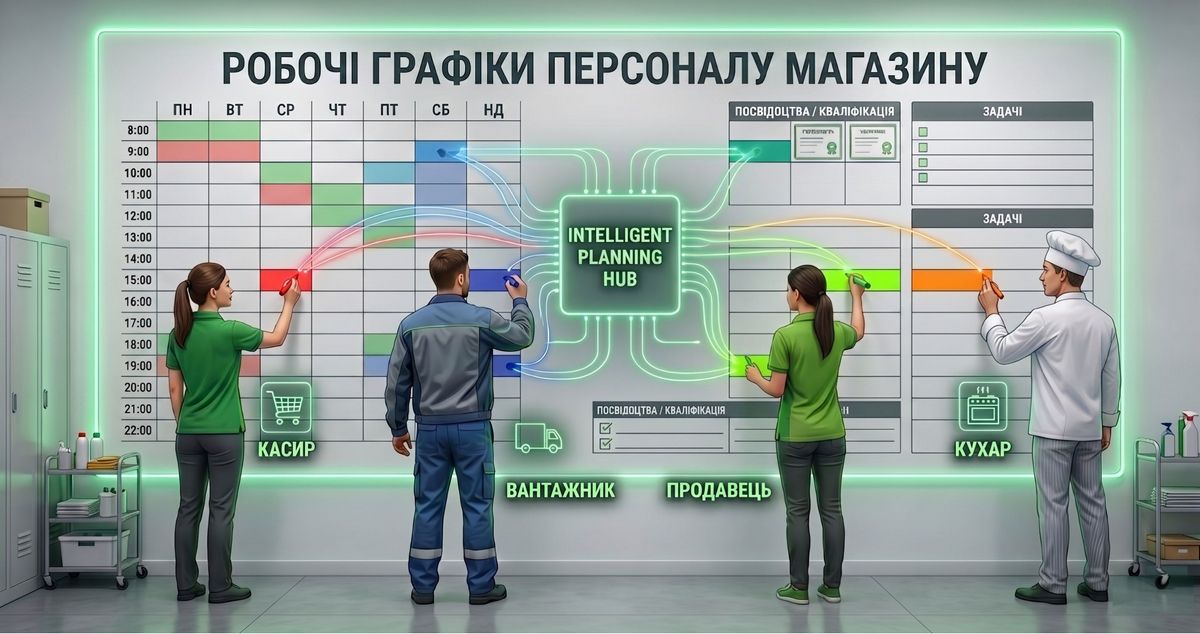
Imagine a familiar scene: a store is packed with customers, two checkout counters are overwhelmed with long lines, while others stand empty, and there is no one available to restock the shelves. Or the opposite — five employees are visibly bored on the sales floor while management calculates the losses from low revenue. Most retailers believe they simply lack manpower, but practice shows this is an illusion.
Today’s labor market dictates new rules where standard recruitment methods no longer yield the expected results. The scale of the problem forces companies into fierce competition for personnel, although the true root of inefficiency often lies not in the headcount, but in the way their time is managed. The problem is not a shortage of "heads" on the payroll, but rather that people are not working when the customer needs them.
Abandoning Standard Shifts: The Path to Flexibility
Retail stubbornly clings to fixed schedules by inertia — a "legacy" of the past that today only erodes staff loyalty. The modern employee seeks to manage their time as easily as ordering food delivery or a taxi. Flexibility is not chaos; it is a higher form of mathematical planning based on sales forecasts and real traffic.
Modern business requires a transition to a data-driven planning model. This is no longer just about "showing up for work," but about precise mathematical coverage of the specific needs of a point of sale.
Flexible shifts and employee multi-functionality are becoming basic requirements for survival. A new approach to planning is based on a deep analysis of:
- Hourly traffic and sales volume dynamics
- Specific operational tasks (from shelf stocking and inventory to online order picking)
- The roles of each employee for every minute of the shift
This is exactly what allows for the primary goal: deploying the right number of people at the right time. The result: zero burnout for staff, the elimination of "expensive" downtime, and maximum efficiency without bloating the headcount.
While HR departments search for new hires, store managers spend hours on the grueling task of manual scheduling. This not only diverts their time from sales management but also creates risks of human error that can cost the business a full day’s revenue at the register.
The key difference in this approach is that modern solutions must plan the store's operations, not just the shifts. First, an understanding of the workload and tasks throughout the day is formed, and only then is the personnel "aligned" to meet it.
The Tweekly Platform: Flexibility as a Standard of Efficiency
Experts at Consulting for Retail note that workforce management technologies are changing the rules of the game. C4R implements a solution that is significantly more than just a WFM system.
In the market, such solutions are often categorized as WFM (Workforce Management). However, in the classic sense, WFM is about schedule planning. In the case of Tweekly, the logic is different: the system does not start with schedules; it starts with the store's operations and the workload that needs to be covered.
Tweekly, a workforce management platform, handles the most complex part of the work—automated calculation of personnel requirements and the generation of optimal schedules. But the key here is not in the timetable automation. Tweekly operates based on the logic of store operations—shaping shifts around the work, rather than the other way around.
The system accounts for key operational factors—from sales and tasks to employee roles—and allows for the synchronization of the team's work with the actual workload throughout the day.
The fundamental difference in this approach is that the system first calculates the volume of work based on set parameters and stores data, and only then determines the staffing needs. In other words, the starting point is the workload, not the schedule.
Tweekly doesn’t just "fill in boxes." The system generates schedules that balance business needs with employee availability, enabling effective team organization.
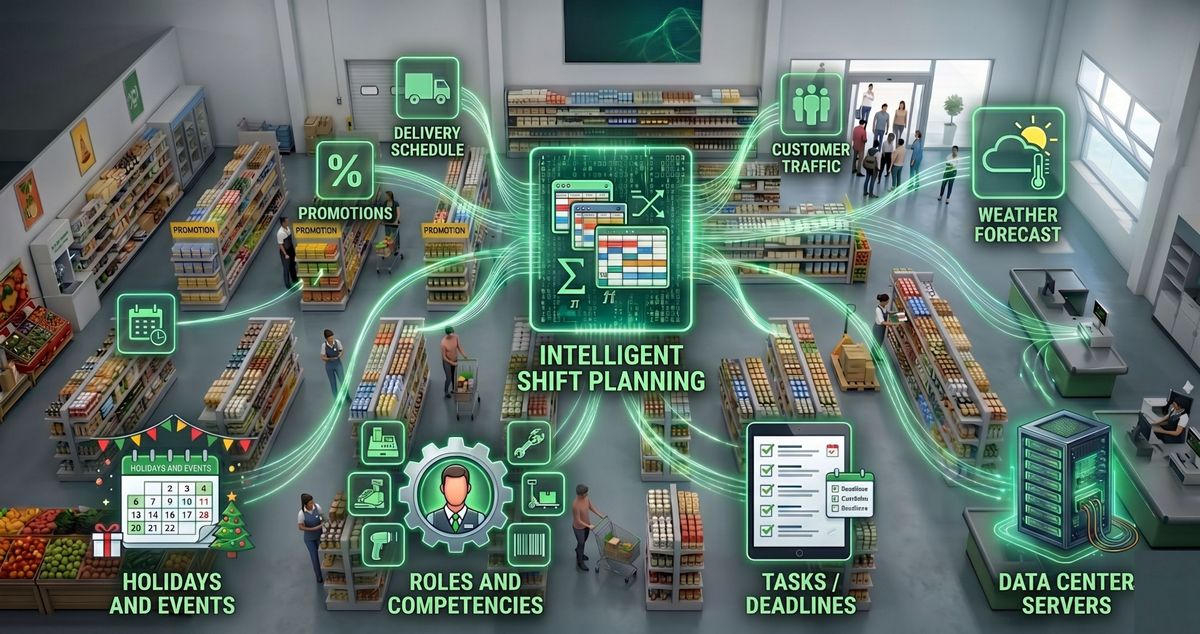
However, software is only part of the success. During the preliminary consulting phase, C4R experts conduct an audit of the retail chain's processes and configure the system according to real-world operational scenarios—from roles to typical staff tasks and peak loads. This allows for more than just program installation; it adapts the system to the unique architecture of a specific business: Retail, HoReCa, or Logistics. The combination of a powerful IT solution and professional expertise delivers results unattainable through manual management.
Strategic Outlook: Who Wins Tomorrow?
Labor shortages in the market are a new reality that is here to stay. However, the winner will be the retailer who replaces intuitive "scheduling by eye" with precise algorithms and learns to effectively utilize every minute of the time of their already hired employees.
Effective workforce management is the only path to consistent service, team loyalty, and high sales in the new market realities.